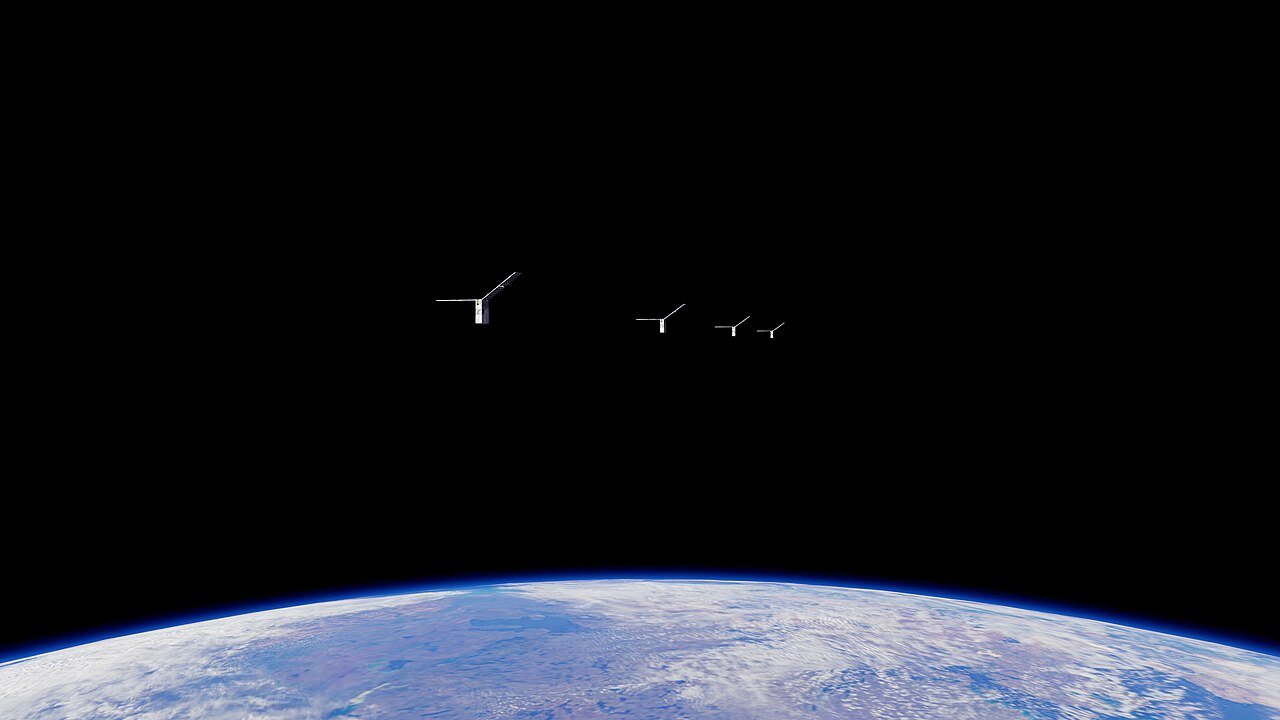
Google’s Project Suncatcher satellite ran Gemma 4 in orbit and sent its first AI-generated response back to a ground station.
Google has received the first AI-generated response from its Project Suncatcher prototype in orbit, a technical milestone in the company’s experiment with space-based computing. The satellite used an onboard Gemma 4 model to write a short poem before transmitting the result to Earth.
The test followed the satellite’s October 1 launch and several weeks of commissioning work. Google said its team powered up the host system and Tensor Processing Unit trays, then ran early machine-learning checks before attempting the first full prompt-and-response exchange.
A simple prompt tests a complex system
During a ground-station pass, engineers asked the model to create a haiku about being in space. The request was sent to the satellite, processed by the onboard hardware and returned while the spacecraft passed near Svalbard, Norway. The team then tried additional space-themed limericks and prompts requesting telemetry about the payload.
The poem itself was playful, but the purpose of the exercise was practical. Google described it as the first AI response from a data-center-class TPU in orbit, showing that the hardware, model and communications link could complete an end-to-end workload beyond Earth.
Heat and radiation are the next tests
Project Suncatcher is a long-term research effort exploring whether AI computing infrastructure could eventually operate in space. The environment creates challenges that terrestrial data centers do not face, including radiation exposure and sharp thermal changes.
Google plans to evaluate how the TPUs behave under those conditions during the satellite’s continuing mission. Reliable performance is essential before the company can move toward a more demanding 2027 milestone: two interconnected satellites that can communicate and coordinate their computing work.
The successful response does not mean an orbital AI data center is ready for commercial use. It does demonstrate that a modern model can receive a prompt, run on specialized chips in orbit and send a usable answer back to the ground. The coming stress tests will determine whether that achievement can be repeated reliably rather than treated as a one-time demonstration.
Waymo and Toyota Prepare bZ4X Robotaxis for Japan

Ethan Cole
Technology EditorEthan Cole covers technology, digital platforms, consumer products, artificial intelligence and the technologies shaping modern culture.
View all 65 stories by this author →Enjoying this story?
Get Lodly in your inbox every morning at 6:00 AM.