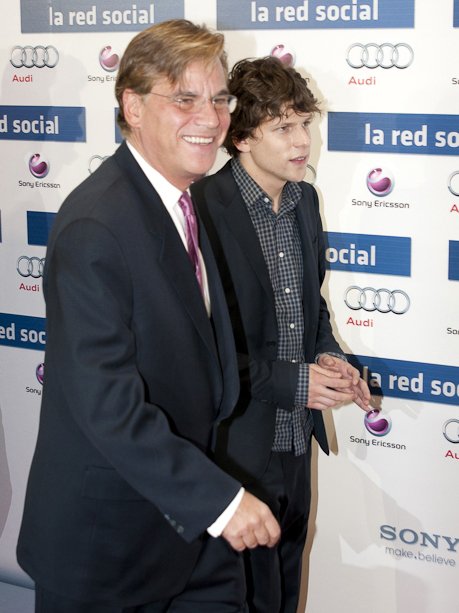
Aaron Sorkin says money could not persuade Jesse Eisenberg to play Mark Zuckerberg again, despite a detailed three-day personal pitch.
Aaron Sorkin says Jesse Eisenberg’s absence from The Social Reckoning was not caused by a lack of effort—or money. The writer-director has detailed the unusually extensive pitch he made to bring the actor back as Mark Zuckerberg, a role that earned Eisenberg an Oscar nomination for The Social Network.
Eisenberg ultimately declined, and Jeremy Strong took over the role for the follow-up. Sorkin said the studio’s financial offer was substantial, but described money as a poor motivator for Eisenberg, whose concerns included raising his children with too much wealth.
Sorkin prepared a personal campaign
The filmmaker’s attempt went beyond sending a script. Sorkin recalled preparing a written outline for his conversations with Eisenberg, something he said he does not normally do while developing films. His case included the dramatic opportunities in the screenplay and the fact that Eisenberg had already proved how effectively he could inhabit the character.
Sorkin said the back-and-forth stretched across a three-day weekend. At one point, Eisenberg acknowledged that the pitch had moved him closer to reconsidering than he expected. Even so, the actor did not sign on.
The decisive issue, according to Sorkin’s account, was Eisenberg’s discomfort with continuing to be associated with Zuckerberg. The resemblance between actor and subject, combined with the original film’s place in Eisenberg’s career, meant another performance risked deepening a connection he no longer wanted.
A sequel with a different creative shape
The casting change is one of several ways The Social Reckoning separates itself from the 2010 film. Sorkin, who wrote The Social Network, also directs the new movie; David Fincher directed the original. Strong’s interpretation therefore arrives within a project that revisits the same corporate world through a different lead performance and filmmaking partnership.
Sorkin’s comments also complicate the common assumption that a large paycheck can resolve any casting problem. In this case, the filmmaker says the offer may have worked in the opposite direction. The role was familiar, prestigious and financially significant, but Eisenberg’s choice appears to have been driven by the identity attached to it rather than the size of the deal.
‘Dirty Dancing’ Sequel Will Honor Patrick Swayze’s Legacy

Elena Brooks
TV & Movies EditorElena Brooks covers television, movies, streaming releases, casting news, trailers and the biggest stories from screens large and small.
View all 249 stories by this author →Enjoying this story?
Get Lodly in your inbox every morning at 6:00 AM.